
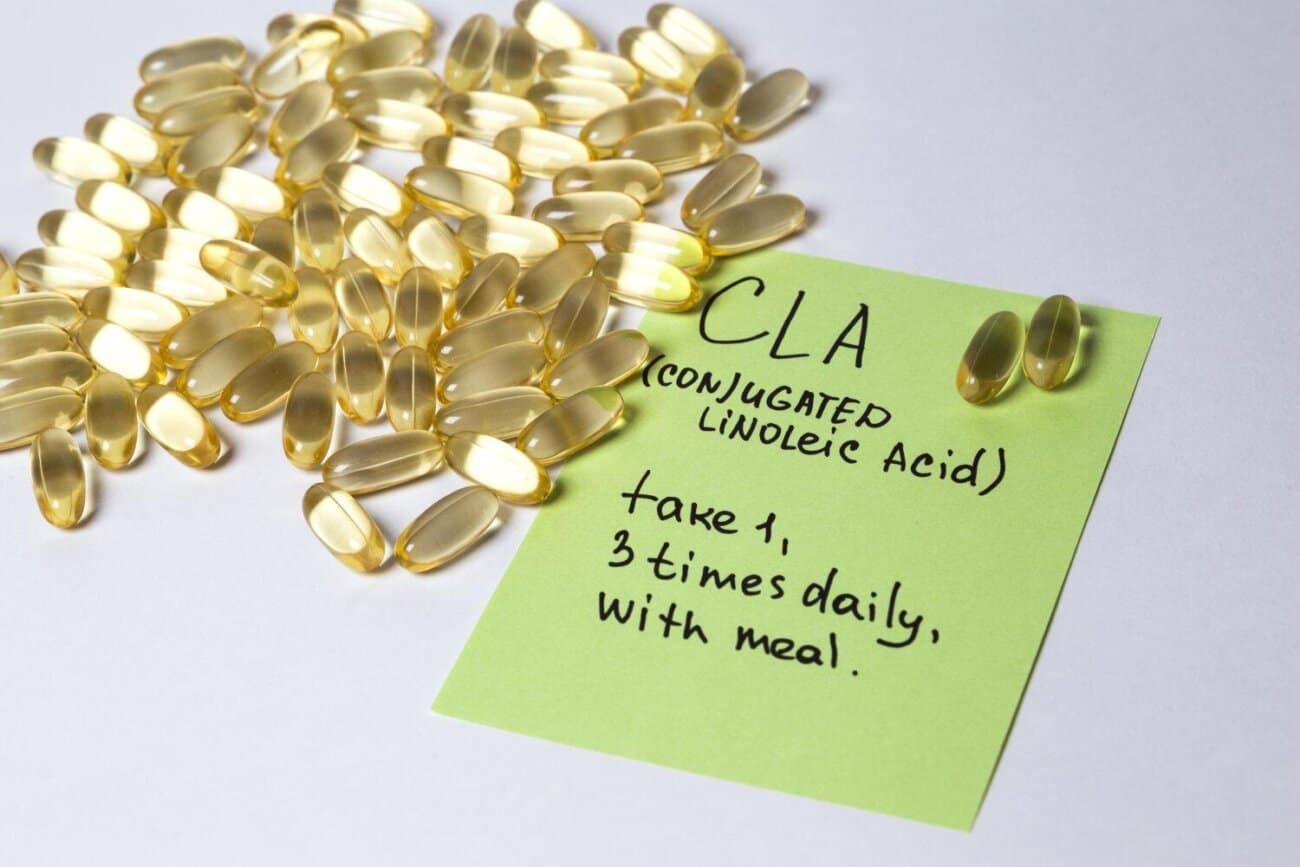
Does CLA really help you lose weight?
CLA is one of the best-known weight loss supplements, and over the years, it has remained on the shelves, with many people swearing that it works.
But does it really work?
First of all, CLA is an acronym, which in Portuguese means Conjugated Linoleic Acid, and basically, it is a fat that you can find in various foods such as meat or milk.
After having demonstrated that it was truly effective in animals, interest naturally arose in its application in humans, and whether or not it would have the same results.
It didn't take long for supplement companies to promote CLA as the fat-blasting, muscle-building wonder supplement.
Unfortunately, in reality it is not quite like that.
We will only investigate the effects of CLA on weight and fat loss, and you will find the references for all the studies used here at the end of the article.
It works
Chinese Population
In 2012, a study was conducted to evaluate the effect of CLA supplementation on weight and fat loss in Chinese people.
63 individuals participated, with a body mass index between 24 and 35 and were separated into two groups.
One group received 1.7g of CLA mixed with 200ml of milk, twice a day, while the other group received vegetable oil instead of CLA, also with 200ml of milk, twice a day.
The study lasted 12 weeks and none of the participants knew which of the mixtures they were using.
The group that used vegetable oil lost an average of 0.07 kg of fat, while the group that used CLA lost an average of 0.69 kg at the end of the 12 weeks.
There were no changes in lean mass.
The results were apparently more positive in women than in men.

2.6% less with the CLA
After passing through China, we now go to Sweden, where a study was carried out in 2001 to evaluate the effectiveness of CLA.
53 healthy people, both men and women, between 23 and 63 years old, were selected and subsequently separated into two groups.
One group received a supplement of 4.2g of CLA per day, while the other group received 4.2g of olive oil.
Both groups lost fat.
However, the group that used CLA, at the end of the 12-week study, lost an average of 2.6% more fat than the group that did not use CLA.
CLA in children
In 2010, a group of researchers decided to analyze the effects of CLA on overweight or obese children.
The study lasted approximately 7 months, and 62 children between the ages of 6 and 10, who were overweight or considered obese, were selected.
Once again two groups were created, in which one group received 3g of CLA mixed in chocolate milk, and the other group received chocolate milk, but without the CLA.
None of the children knew which group they belonged to.
While the group that used only milk increased their body mass index by 1.1%, the group that had the addition of CLA had a smaller increase of approximately 0.65%.
It was also noted that the group that used supplementation had a lower increase in fat, mainly in the abdominal area.

90 days of CLA in women
For this study, 40 women diagnosed with metabolic syndrome were selected, and for 90 days, two groups were created, in which one received 3g of CLA daily and the other group did not.
In addition, all participants followed a low-calorie diet.
At the end of the study, women who used CLA lost an average of 2.3% of body fat, while the group that did not take the supplement lost an average of 1.2%.
The fat loss effects started earlier in the supplemented group than in the non-supplemented group.
Doesn't Work
CLA + Chromium
This study evaluated the results of combining CLA with the supplement Chromium, also often used for fat loss.
35 overweight women, with a BMI of approximately 28, and approximately 36 years old, were selected.
The study lasted 12 weeks and in addition to supplementation, these women also followed a low-calorie diet and had to walk at a moderate intensity or jog lightly for 30 minutes, five times a week.
Two groups were created, the only difference being that one of them ingested 400ug of chromium with 1.8g of CLA, and the other ingested only vegetable oil.
Both groups lost weight and fat, but there were no significant differences between them.

1 year of CLA
In 2006 they decided to conduct a longer study and evaluate the effects of CLA over a period of one year.
Unlike the other studies we have presented so far, this one did not focus on fat loss, but rather on another of the supposed benefits of this supplement, prevent people who have lost fat from gaining it back.
122 obese individuals with a BMI greater than 28 were selected and to test this hypothesis, these people followed a hypocaloric diet with a caloric deficit of between 800 and 1000kcal, still without CLA.
After eight weeks, the group was reduced to only those participants who had lost more than 8% of their initial weight, which reduced the group to 101 people, and ended this fat loss phase.
These 101 people were then separated into two groups, with one group receiving 3.4g of CLA daily for a year, and the other group receiving 3.4g of olive oil for comparison.
The calorie restriction in this phase dropped to just 300 kcal, and the final results were not very encouraging.
The group that used CLA gained an average of 4.8 kg in weight at the end of one year, and fat gains averaged 3.5 kg.
In the group that used olive oil, the average weight gain was 4.5 kg and the fat increase was 3.8 kg.
CLA + Exercise
This study was presented this year, and evaluated the impact of this type of supplementation on fat loss in combination with exercise in women considered obese.
Twenty-eight women were selected and, for 8 weeks, half of them received 3.2g of CLA per day and the other half 4g of olive oil. Both groups followed the same aerobic exercise protocol.
As expected, both groups showed positive results.
The group that used CLA lost 1% of trunk fat, 1% of leg fat and 1.7% of total fat.
The group that instead of using this supplement, received olive oil, lost 0.5% of trunk fat, 1.6% of leg fat and 1.3% of total fat.
That is, in total the difference was 0.4% between groups, a non-significant result.

Healthy and active people
Finally, in 2007 a study was presented that analyzed the effects of this supplement on people who exercise and have a body weight considered normal.
For this, 25 men and 37 women who met these requirements were selected and separated into two groups.
One group received 3.9g of CLA and the second group received 3.9g of sunflower oil for 12 weeks.
The conclusion was that this supplement had no significant impact on body composition, appetite or metabolic rate.
Conclusion
What conclusion can we draw from this?
There are only eight studies, so no definitive conclusions can be drawn, but apparently, CLA is far from being a consensual supplement like, for example, Creatine.
On the one hand, there are studies with favorable results, but the numbers are not impressive, and apparently the effect is very modest. when it works.
On the other hand, there are studies that show that there is no benefit whatsoever in using CLA for the purpose of losing fat, with results similar to those who did not use this type of supplementation.
In practice, it is very difficult to evaluate the effectiveness of CLA, as it is normally combined with a low-calorie diet and exercise, which in itself leads to fat loss.
Furthermore, unlike most thermogenics, where an immediate response is noted due to the stimulating effect, CLA does not have this type of effect.
It doesn't seem like a very promising supplement for fat loss, but if you've tried it, tell us about your experience in the comments.
[toggle title=”References” state=”close” ]
Chinese Population
2.6% more
CLA in children
90 days of CLA in women
CLA + Chromium
1 year of CLA
CLA + Exercise
Healthy and active people
[/toggle]



I use CLA, as well as creatine, and I must say that so far it has had a good effect. Combined with my CrossFit training, I have noticed a considerable reduction in weight/measurements. I just hope that I don't gain weight again if I stop taking it! Hahaah
I have taken 2 different brands and they had no effect. I train 4 times a week and I have not noticed any difference with taking CLA. I prefer L Carnitine or Acetyl L Carnitine by far.