
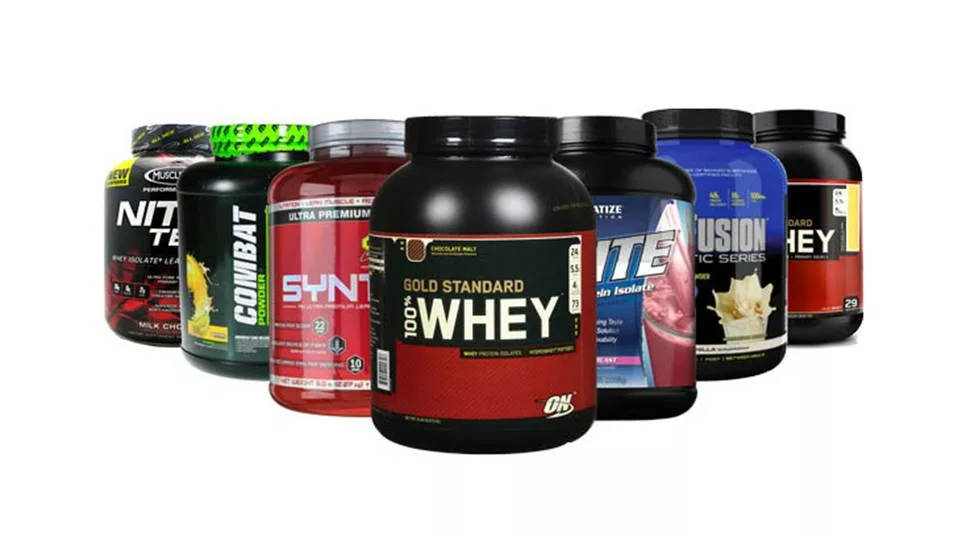
The definitive guide to Whey Protein
In this guide you will find out all the details about Whey Protein.
What it is, what different types are available, its benefits and much more.
We have tried to cover all the relevant topics about this supplement so that you can understand why it is so popular.
At the end, if you still have any questions, just use the comments area.
So let's get started.
What is Whey Protein?
It is a milk protein, more precisely whey protein, and is obtained during the cheese making process.
Whey proteins make up about 20% of the protein content of animal milk, with the remainder of the proteins being casein fractions (~80%).
Whey protein production can be done through various filtration methods (microfiltration, ultrafiltration, etc.), depending on the desired protein content.
Once filtered, the protein is spray-dried to produce its desired powder form, after which it may undergo additional modifications by manufacturers, such as flavorings, colorings, etc.
It is a complete protein source, which means that it contains all 9 essential amino acids, has a high biological value and a high concentration of BCAA's.
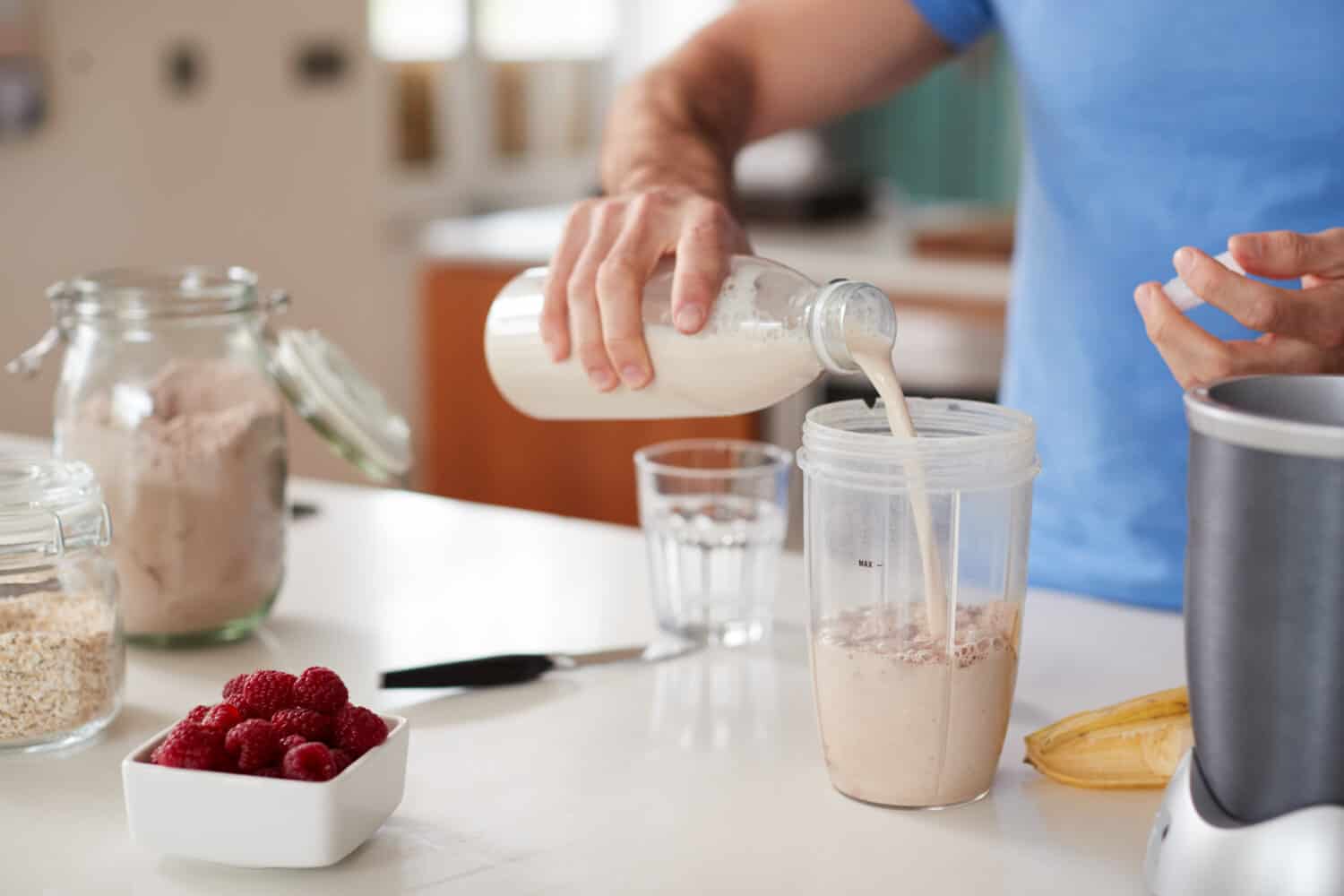
What are the different types of Whey Protein?
Whey Protein Concentrate
This is the cheapest and most common way.
It is produced by ultrafiltration of whey and normally offers protein concentrations between 70 and 80%, thus also providing some carbohydrates (lactose) and fats.
Since the concentration of this protein is around 70-80%, it means that for every 100g we have on average between 70 and 80 grams of pure protein, which is a very good value.
Para além disso, tem uma elevada quantidade de BCAA’s e outros aminoácidos essenciais e é de rápida absorção.
Whey Protein Isolate
The isolated form is basically an evolution of the concentrated version.
It can be produced through various filtration techniques and achieves protein values in the order of 85-95%, which is excellent.
Furthermore, due to greater filtration, fat and carbohydrate levels are greatly reduced, and can even reach zero, eliminating lactose.
For example, in a protein with a concentration of 95%, we have 95g of high-quality protein for every 100g.
Hydrolyzed Whey Protein
This is the latest production technique for this type of supplement.
It is produced through enzymatic hydrolysis of concentrated and/or isolated Whey.
With this technique the protein is absorbed more quickly, since the peptide bonds are separated and digestion is facilitated.
This is usually the most expensive form.

What are the benefits of Whey Protein?
Protein is an essential macronutrient and plays a crucial role in muscle development and maintenance, as well as many other physiological processes.
Simply put, amino acids are the building blocks of proteins and proteins are the building blocks of muscles.
In addition, amino acids play an important role in maintaining a healthy immune system, cardiovascular function and brain metabolism.
Supplementing with protein brings many benefits, which essentially come from the biological function of essential amino acids.
A proteína do soro é uma proteína completa, com uma quantidade elevada de L-Leucina, essencial para estimular a síntese proteica, entre outros EAA’S.
Some of the reasons for using this type of supplement:
- Stimulates protein synthesis(3)(6)
- It is quickly absorbed/digested
- It is easy and convenient to use
- Increases the anabolic response to resistance training(3)(2)
- May function as an anti-catabolic during prolonged aerobic activities(2)
- Strengthens the immune system(5)
- Promotes fat loss(4)
- Helps maintain lean mass(3)(4)
- Recovery aid (1)(2)
How does it compare to other types of protein?
The most popular way to determine the quality of a protein is through its biological value.
The biological value of a protein refers to a practical measure that assesses the degree to which we are able to utilize that protein.
Basically, the higher the biological value of a protein, the more effective its use will be.
- Concentrated and isolated whey - Between 100 and 159
- Complete egg – 100
- Milk – 91
- Egg white – 88
- Cottage cheese – 84
- Tuna – 83
- Chicken – 79
- Peanuts – 68
- Oats – 58
How and when to take Whey Protein?
The best time to take this supplement is without a doubt before and after training, however, it can be used throughout the day when you want a quality source of protein.
Example: Add protein to your snack.
There is no universal value for the amount to take per day, as this always depends on the person and should be used as a way to meet daily protein requirements.
An article that addresses this topic in more detail is The best times to take Whey.
What are the side effects of Whey Protein?
This supplement is usually well tolerated, however, in special cases the following may occur:
- Bloating/intestinal discomfort
- Nausea
- Gases
- Allergic reactions
These problems usually arise when there is a food allergy (lactose) or when protein consumption is too high.
If you experience intestinal discomfort with concentrated whey, try an isolate or a whey supplement with added digestive enzymes to facilitate digestion.
How to choose a good Whey Protein supplement?
To choose a good Whey Protein supplement, the first step is to always look at the product label, analyzing the ingredients and nutritional value.
The supplement must have at least 70 to 80% of protein, that is, between 70g and 80g of protein for every 100g, with the ideal being around 80% in the case of concentrate and 90% in the case of isolate.
If it is a mixture of several proteins, it should contain between 75% and 85% of protein.
Protein sources should always be concentrated, isolated or hydrolyzed Whey.
You can have just one of them or a mix, depending on what you are buying.
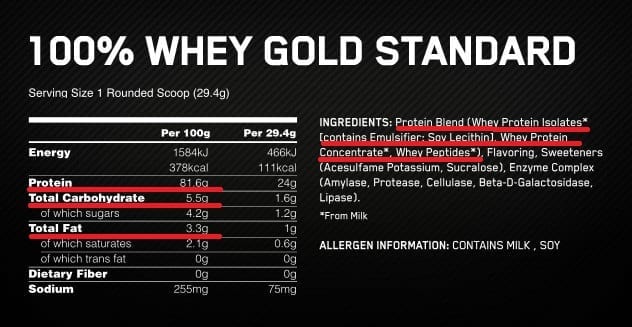
Another important point is to analyze the additions made by the brand and the aminogram.
If you see additions like glycine or taurine on the label, it is usually a bad product.
In the aminogram you should also look at the amounts of BCAA's (Leucine, isoleucine and valine).
Uma boa Whey Protein traz pelo menos entre 17g a 18g de BCAA’s no caso da concentrada, e 20-22g no caso da isolada.
Furthermore, a good Whey Protein has low amounts of carbohydrates (5-10g/100g) and fats (4-8g/100g).
Here you have our list of best whey protein supplements from the market.
Does Whey make you fat? Does Whey lose weight?
To gain weight, there needs to be a caloric excess, that is, we need to eat more calories per day than we consume, so it doesn't just depend on Whey.
A whey protein shake has about 100 calories, making it very difficult for someone to gain weight from these shakes.
For this to eventually happen, your diet would have to be already very high in calories, and the Whey would have to have increased even more, and even then it wouldn't make a very significant contribution to weight gain.
That said, using Whey Protein to gain muscle mass is a good idea, as it will help increase the protein content of your diet and its quality.
For those looking to lose weight, this supplement can be a good ally in maintaining lean mass while eliminating fat.
What is the best Whey Protein supplement?
The best supplement is the one that has the highest amount of quality protein, with the lowest amount of carbohydrates and fats.
You find here our Top 10 Whey supplements.
What is the worst Whey Protein supplement?
Products with a high amount of carbohydrates and low amounts of protein should be avoided.
Protein sources should be whey protein and not wheat proteins and the like.

Techniques such as aminospiking are also not welcome. (See 100% Whey Prime review).
Concentrated Whey or Isolated Whey?
Whey Concentrate is the most economical whey supplement and is generally well tolerated.
Depending on the concentration of the powder, it is a excellent option for those who don't want to spend a lot of money and have a quality protein supplement.
As for disadvantages, it has a slightly lower bioavailability compared to the isolate and a lower protein concentration.
It also has a little lactose and if you are lactose intolerant it is not a good idea.
As for Whey Isolate, it has very high bioavailability, is even easier to digest, is very low in fats/carbohydrates and has a very high protein concentration (+90%).
The downside?
The price.
You can find our article here Isolated vs Concentrated Whey, is the isolated one worth it?

Conclusion
Whey Protein supplementation is very famous, and for obvious reasons.
It is an economical source of protein, with an excellent amino acid profile and very practical, making it much easier to reach the necessary daily protein values.
Although it doesn't work miracles, its benefits are clear, and if you're looking for your first supplement, a good Whey Protein is probably your best bet.
Pass here in this article where we show you the best Whey protein supplements or take a look at our section analysis to ensure you are buying a good product.
If you have any questions, please use the comments section below!
References
(1) https://jissn.biomedcentral.com/articles/10.1186/1550-2783-5-S1-P6

(two) https://europepmc.org/article/med/20048505

(3) https://pubmed.ncbi.nlm.nih.gov/23343671/

(4) https://pubmed.ncbi.nlm.nih.gov/18371214/

(5) https://pubmed.ncbi.nlm.nih.gov/25530736/

(6) https://pubmed.ncbi.nlm.nih.gov/24257722/
Should I use whey protein on non-training days?
If you can reach your daily protein intake without using Whey Protein, you don't necessarily need to use this supplement on non-training days.
If you are unable to reach the daily protein requirement, you can use it to achieve this even on days when you do not train.
Do I use water or milk to mix my smoothie?
Also, don't forget that milk has a significant amount of sugar and some fat.



Congratulations on the guide, it is really very enlightening :)
Keep going!
Excellent guide!
I'm loving this site for answering my questions about whey protein. But I'd like to know how daily requirements vary depending on a person's activity, weight and goals...
Weight gain/muscle mass: https://ginasiovirtual.mystagingwebsite.com/quantas-calorias-utilizar-para-ganhar-massa-muscular/
Weight/fat loss: https://ginasiovirtual.mystagingwebsite.com/quantas-calorias-ingerir-para-perder-peso/