
ZMA, the supplement that supposedly increases Testosterone levels.
ZMA is a supplement composed of two minerals, Zinc and Magnesium, and a vitamin, Vitamin B6.
It is promoted as a natural anabolic, that is, it theoretically increases testosterone levels naturally. At least that's what the brands say!
Furthermore, in theory, it can improve recovery, improve sleep quality and also provide gains in terms of sports performance.
It really does seem like an amazing supplement, but…is it really?
We decided to analyze these benefits in detail and see if ZMA really delivers what it promises.
We'll start by giving a brief presentation of each of the ingredients in this supplement, and then we'll look at how effective ZMA is for those who go to the gym.
Note: Some benefits are intrinsically linked, an increase in testosterone will lead to better recovery. In addition, studies on the ZMA supplement are scarce, so we also analyzed several studies on the ingredients separately.
Zinc and Magnesium
We start by talking about Zinc.
Zinc is one of the 24 micronutrients essential for survival and is found, for example, in meat and eggs.
Zinc is easily lost through sweat, and can be a smart supplement for people who sweat a lot during training, or during the summer, when temperatures rise.
The most common dose found in ZMA formulas is 30mg.
We now move on to Magnesium.
Magnesium is also a mineral and is the second most common deficiency in developed countries, surpassed only by Vitamin D.
It is the second most abundant electrolyte in the human body, and is found mainly in nuts and vegetables.
The most common dose found in ZMA supplements is 450mg.
Avoid formulas that use Magnesium Oxide, as it is a less efficient form of Magnesium, and more likely to have laxative effects, and is even used for this purpose.
Vitamin B6
Finally, we have Vitamin B6, which is one of the vitamins in the B vitamin complex.
This vitamin is found mainly in meats and the dose found in ZMA supplements is normally 10.5mg.
It is an important cofactor in the metabolism of carbohydrates, proteins and fats.

Increased testosterone…is it true?
ZMA may indeed increase testosterone levels, but…only in some people.
Testosterone, as you know, is the main male hormone, and plays a huge role in anabolism, which in other words means…gaining lean mass!
Zinc deficiency can reduce the expression of androgen receptors and testosterone synthesis in cells.(1)
What does this mean?
This means that if you are deficient in Zinc, your testosterone levels will drop and your estrogen levels may even increase(1).
Yes, estrogen, the main female hormone, you definitely don't want this.
That said, although zinc supplementation in people deficient in this mineral leads to increases in testosterone levels, this apparently does not happen in healthy people without any deficiency.
Let's take a look at some studies.
In this study(2), healthy men who practiced regular physical exercise did not experience any increase in testosterone with the use of ZMA.
In another study, this time carried out on infertile men, those who had low testosterone levels had an increase in this hormone, while those who had normal levels had no increase.(3)
In another study, they concluded that supplementation with Zinc, after four weeks of intense exercise, helps to maintain not only normal testosterone levels, but also thyroid levels.(4)
In addition to Zinc, Magnesium may also have a positive role in testosterone levels, although minimal.(5)
Therefore, we can conclude that supplementation with ZMA leads to increased testosterone levels in people deficient in Zinc, and to maintenance of testosterone levels in those who practice intense exercise.
As for the increase in testosterone levels in healthy people, and with a diet that contains sufficient levels of Zinc, it does not seem very likely that this will happen.

Recovery, endurance and strength
Magnesium helps regulate muscle contraction, and depletion of this mineral can cause not only cramps but also muscle pain(6), so avoiding a magnesium deficiency alone is essential for good muscular strength and endurance.
Magnesium is the second most common deficiency in developed countries, but what if you don't have a magnesium deficiency?
In a study of active women taking magnesium oxide, magnesium levels increased, but there was no significant impact on performance(7).
In another more rigorous study, supplementation with high doses of magnesium four weeks before a triathlon event significantly improved sports performance in these athletes(8).
Finally, ZMA supplementation had no significant impact on strength or anabolism compared to the group that did not use ZMA over an eight-week period.(9)
Therefore, apparently the benefits of this supplementation in terms of performance seem to be a little questionable.

Sleep improvement
To conclude, let’s look at the benefits of ZMA for sleep.
Magnesium can have a sedative effect, especially in people with a deficiency of this mineral, which can make it easier to fall asleep.
Furthermore, it appears to have a slightly anxiolytic effect, which can actually make it easier to fall asleep, especially during periods of stress(10).
So if you have trouble sleeping due to magnesium deficiency or stress, falling asleep faster will mean you sleep longer, which will help you recover better and improve your hormonal response. In other words, there may be indirect benefits to your testosterone levels.
But, if you have no trouble falling asleep, doesn't ZMA do anything for you?
Can.
Studies that analyze the impact of magnesium on sleep quality are carried out in older populations, but show that in people with a deficiency of this mineral, magnesium supplementation actually improves sleep quality, and in healthy people, it mitigates the negative impact that the aging process has on sleep.(11)(12)
Please note, these effects are in older populations (55+), so they may not translate to younger, healthy populations.
One of the most common comments from those who start supplementing with ZMA is a deeper and more restful sleep, so here indirectly there may be a positive effect on several levels for those who work out at the gym.
Finally, Vitamin B6.
Vitamin B6 is the most difficult ingredient to justify in this formula, and it doesn't even appear in the name of the supplement, unlike Zinc and Magnesium.
This vitamin plays an important role in the functioning of certain enzymes, and will help above all with recovery and sleep.
Why?
Vitamin B6 is an essential cofactor in the production of several neurotransmitters, including Serotonin and GABA.
This is one of the reasons why some people who supplement with ZMA report deeper sleep, more intense dreams or greater energy levels and good mood during the day, as the levels of several neurotransmitters are optimized with this vitamin.
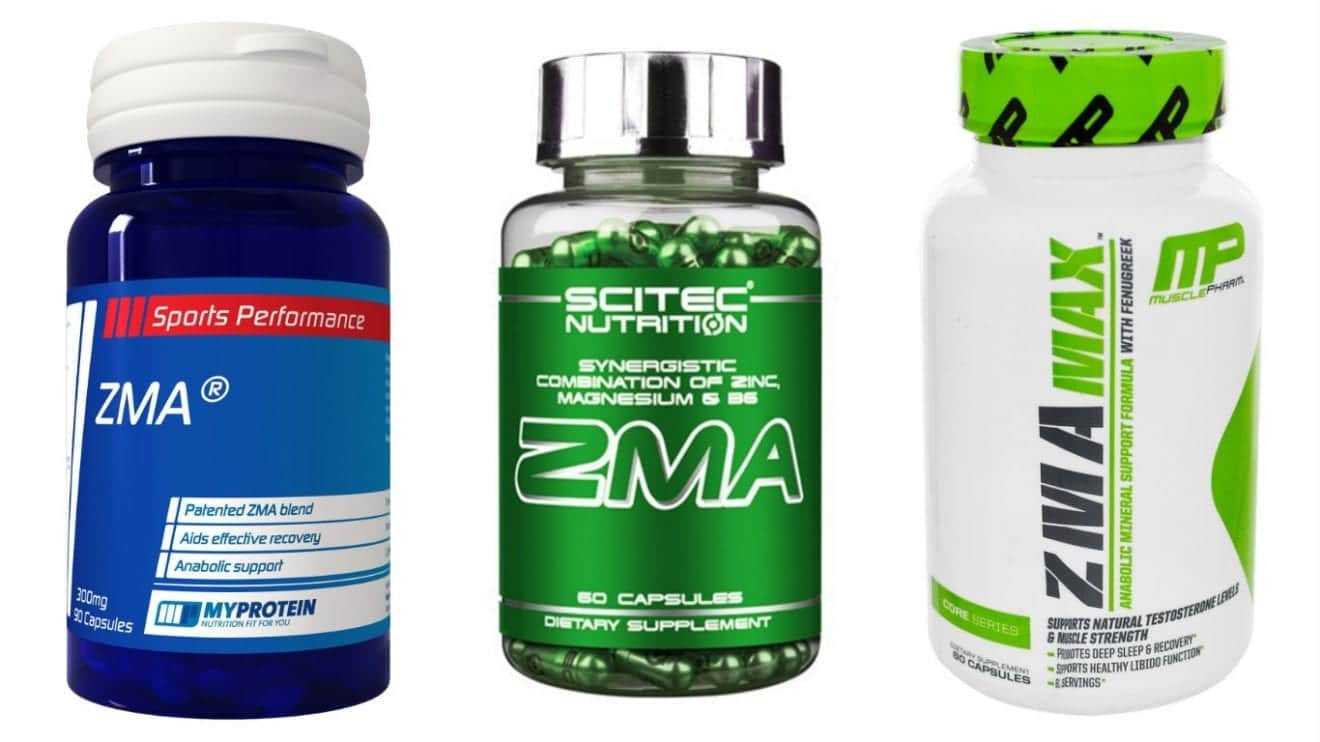
ZMA, yes or no?
ZMA supplementation is done before bed, preferably away from meals, as you should not mix this supplement with foods or supplements that contain it. Calcium or Iron, because they can impair its absorption.
Don't forget to look at the label and choose a supplement that doesn't use magnesium in oxide form, as it is less effective. Magnesium Citrate, for example, is a good choice.
Is ZMA worth it?
It depends on expectations.
If you are looking for a direct and significant increase in testosterone, this will only happen if you have a Zinc deficiency.
However, improving the quality of sleep alone can lead to many benefits, and maintaining testosterone levels for those who do very intense training is also a plus.
There is no magical synergy between these three ingredients and it is far from being considered an essential supplement, although it is useful in some cases.
Have you used it? Leave your opinion in the comments.
[toggle title=”References” state=”close” ]1 – http://www.ncbi.nlm.nih.gov/pubmed/8613886
2 – http://www.ncbi.nlm.nih.gov/pubmed/17882141
3 – http://www.ncbi.nlm.nih.gov/pubmed/7271365
4 – http://www.ncbi.nlm.nih.gov/pubmed/16648789
5 – http://www.ncbi.nlm.nih.gov/pubmed/20352370
6 – http://www.ncbi.nlm.nih.gov/pubmed/8754704
7 – https://pubmed.ncbi.nlm.nih.gov/11252079/
8 – http://www.ncbi.nlm.nih.gov/pubmed/9794094
9 – http://www.ncbi.nlm.nih.gov/pubmed/18500945
10 – https://pubmed.ncbi.nlm.nih.gov/15159129/
11 – http://www.ncbi.nlm.nih.gov/pubmed/21199787
12 – http://www.ncbi.nlm.nih.gov/pubmed/12163983[/toggle]

Can I take zma and then eat it?
Yes, although it is not advisable for the meal to contain a lot of calcium if it is too close to the time of taking ZMA.
What is your opinion on myprotein ZMA? Thank you.
Apparently the formula has changed in a negative way.
Be careful with the Myprotein Zinc and Magnesium supplement. I ordered it thinking that the ingredients were of high availability as stated on the website. When the product arrived, I saw on the label that it contained magnesium oxide and zinc oxide. In the meantime, they have corrected the information on the website, and I am left burning with this lower quality product. Of course, I have to keep it. It is better to buy the ZMA from Myprotein, if the ingredients stated on the website are correct. If not, there are many options at Prozis.
In fact, the formula has unfortunately changed on the website.